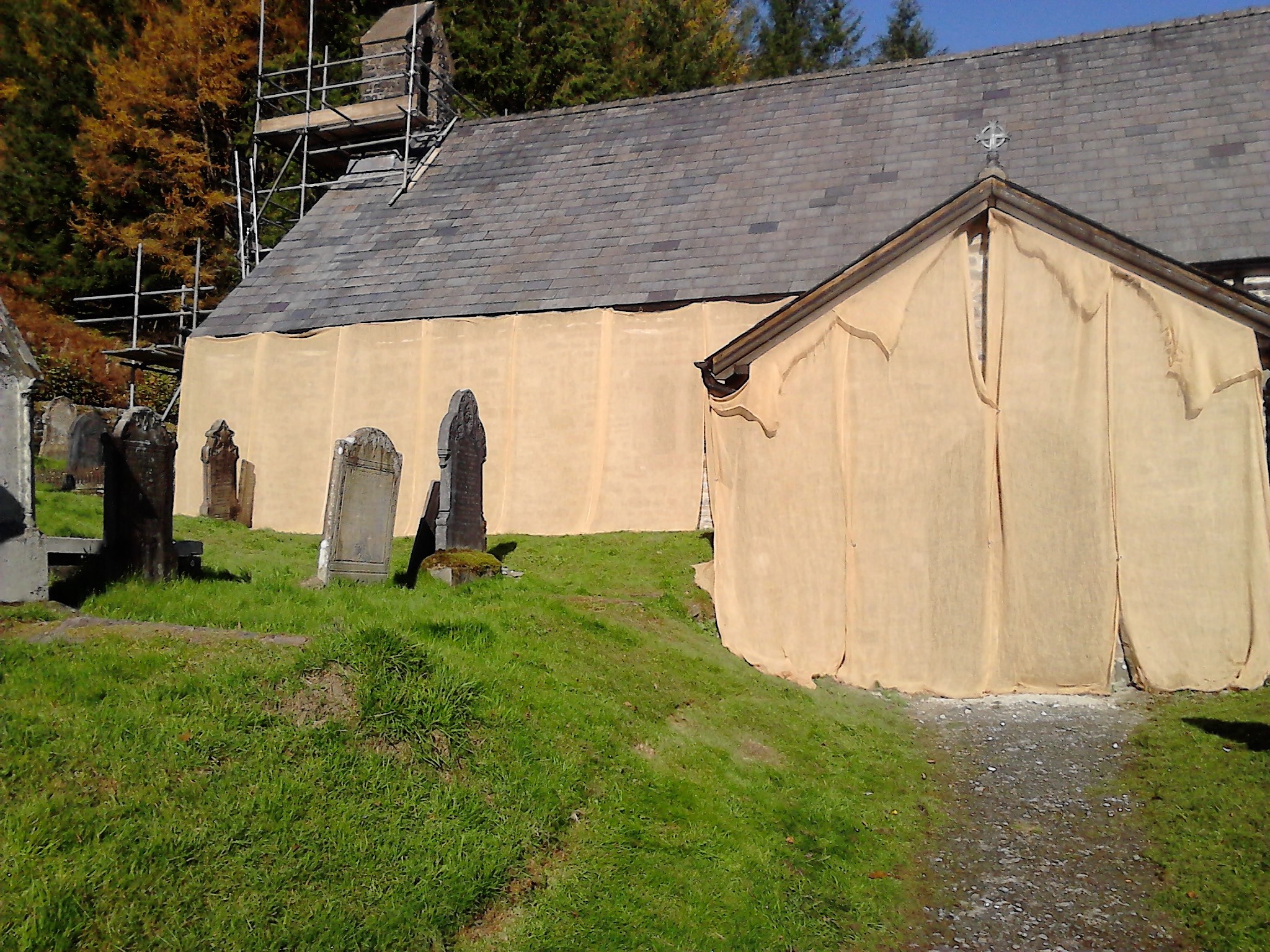
In 2015 work began to raise money for funding much needed renovation work. That year saw significant rain which resulted in increased levels of damp and water ingress. The Church had been showing significant signs of deterioration for several years but 2015 was the catalyst for action.
The Parochial Church Council (PCC) for the Benefice, appointed Hook Masons of Hereford as the Architects to investigate and produce a detailed report which began the task of seeking out funding.
Full funding of £150,000 was achieved in 2018 with significant grants from:
– The Heritage Lottery Fund £80,000
– All Churches Trust £20,000
– Garfield Weston Trust £7,500
– Community Council £10,000
– Representative Body of the Church in Wales £3,000
– Local Concert and individual giving £1,800
Following a competitive tender work began on the 17th September 2018.
Work included:
- removal of all external stone lime and cement mortar and replace with new lime based mortar. Some task, given the extent of the external walls and the contractor could only use a hammer and chisel.
- lifting and replacing with new the wooden floors under the pews and repair to damaged pews.
- resetting the medieval font to remove the steps and making it less risky for the priest and recipient at baptism time!
- relaying the entrance porch slab floor to facilitate disabled access.
- digging out and providing a French drain around the church.
- repair the Bellcote to prevent water ingress.
- make good the internal walls and windows and redecorate.
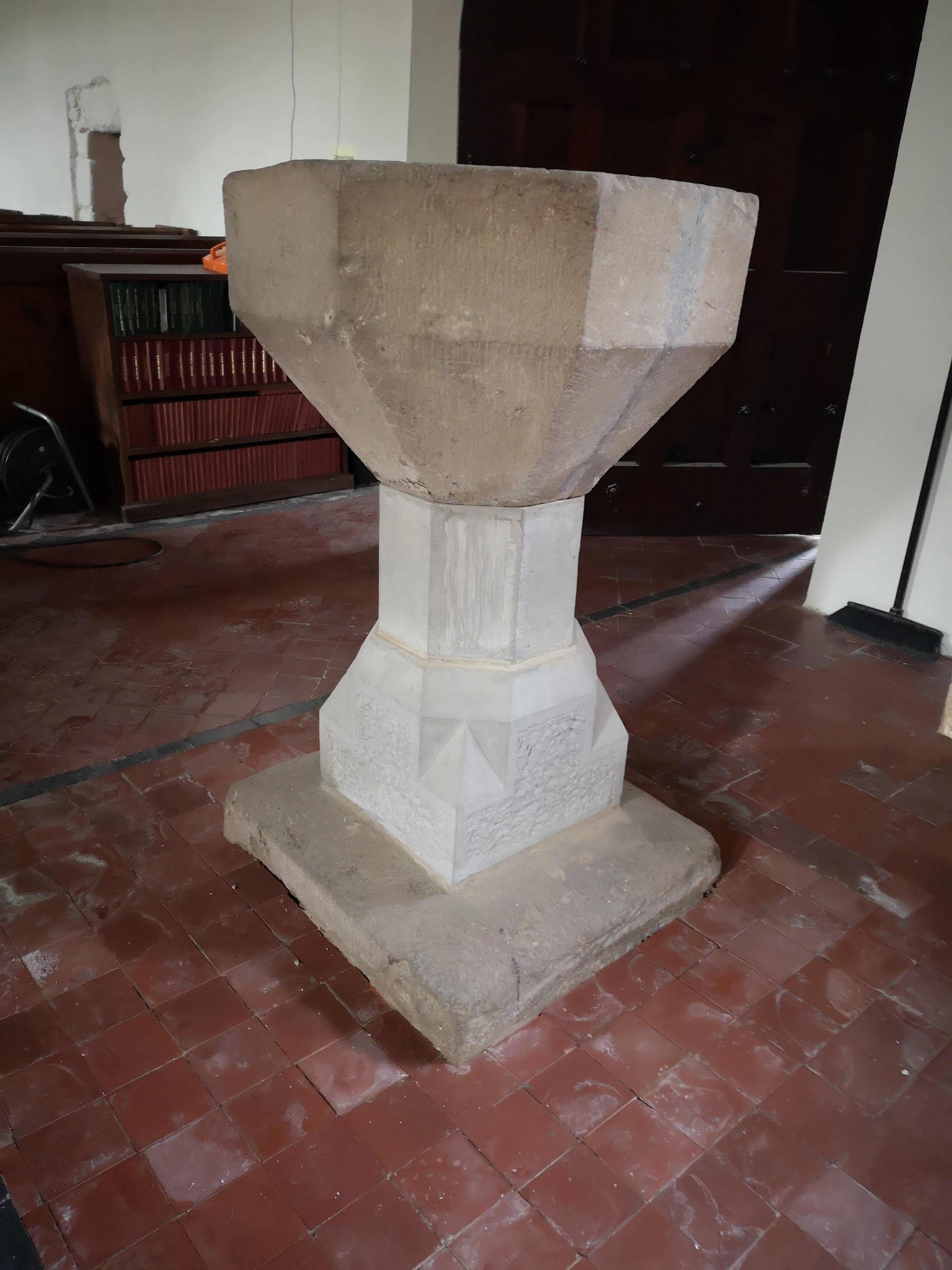
The old font was disassembled to facilitate lowering its overall height. This revealed a rectangular hole beneath, the function of which was to drain away surplus Holy water over the centuries.
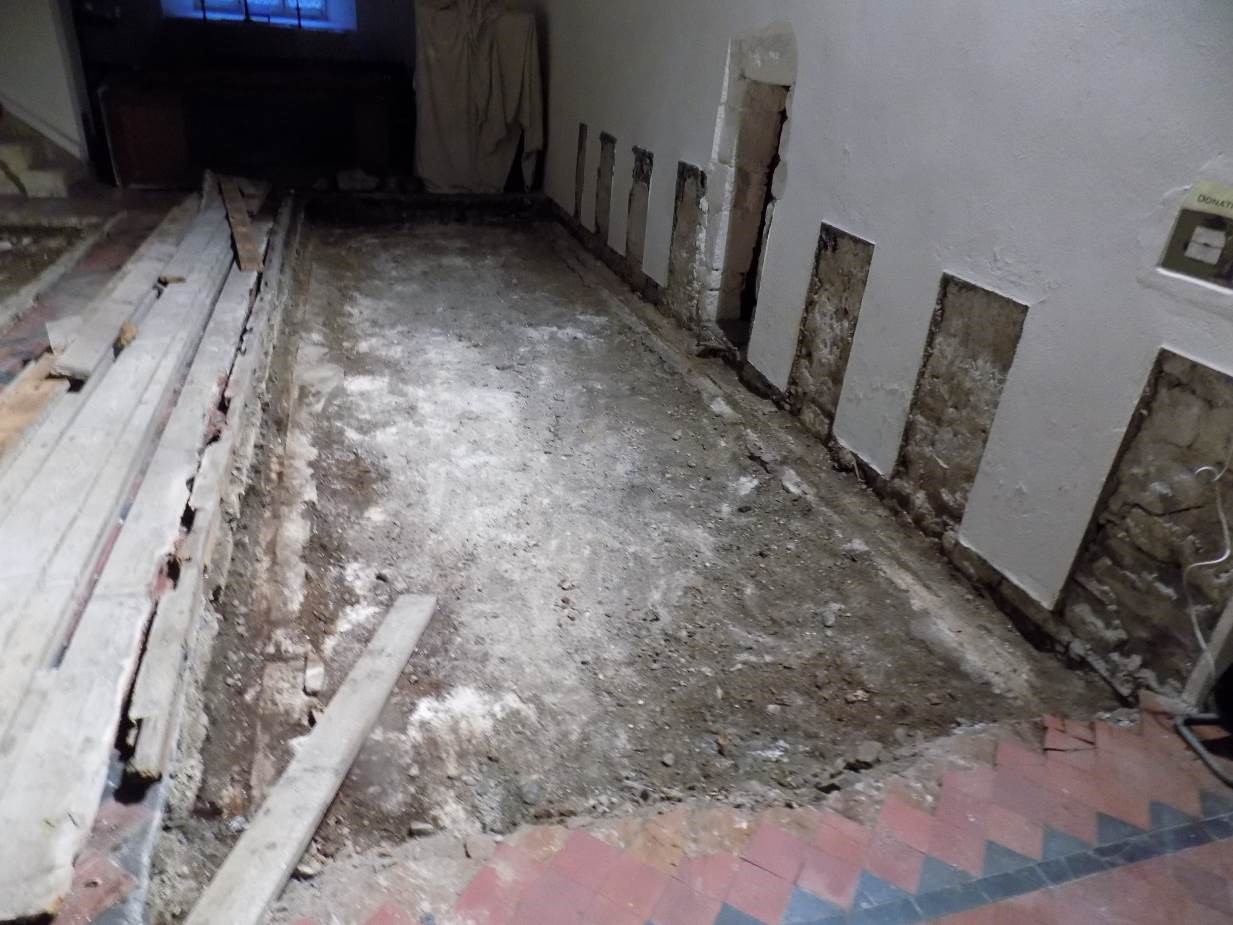
View with pews removed and wooden floor removed
Medieval Remains
The Contractor was amazed to discover a number of remains in the bottom of the hole at a depth of about 12 inches. Following a lengthy procedure, the Bishop instructed that an Archaeologist be summoned! They, (a husband and wife team) confirmed that the remains were human and on further examination indicated the two main bones were a femur and fibula and one or two smaller bones. Further excavation revealed the probability of a full skeleton of a man (on a West–East orientation) of around 60 years of age and weighing up all factors he could be 500 or more years old.
Whilst excavating the french drain around the church between the porch wall and the cremation internment site, many bones were uncovered, according to the Archaeologist the equivalent of 30 -40 human bodies. These would have come from inside the church. Up to the 17th century many rural churches had dirt floors. The local “well heeled” were buried inside the church extending across the nave and into the sanctuary.When the floor was tiled in the 18th century the associated work uncovered the burials that were removed and re-interned outside. Given that the burials were at a shallow depth, its clear where the derivation of the term “stinking rich” came from.
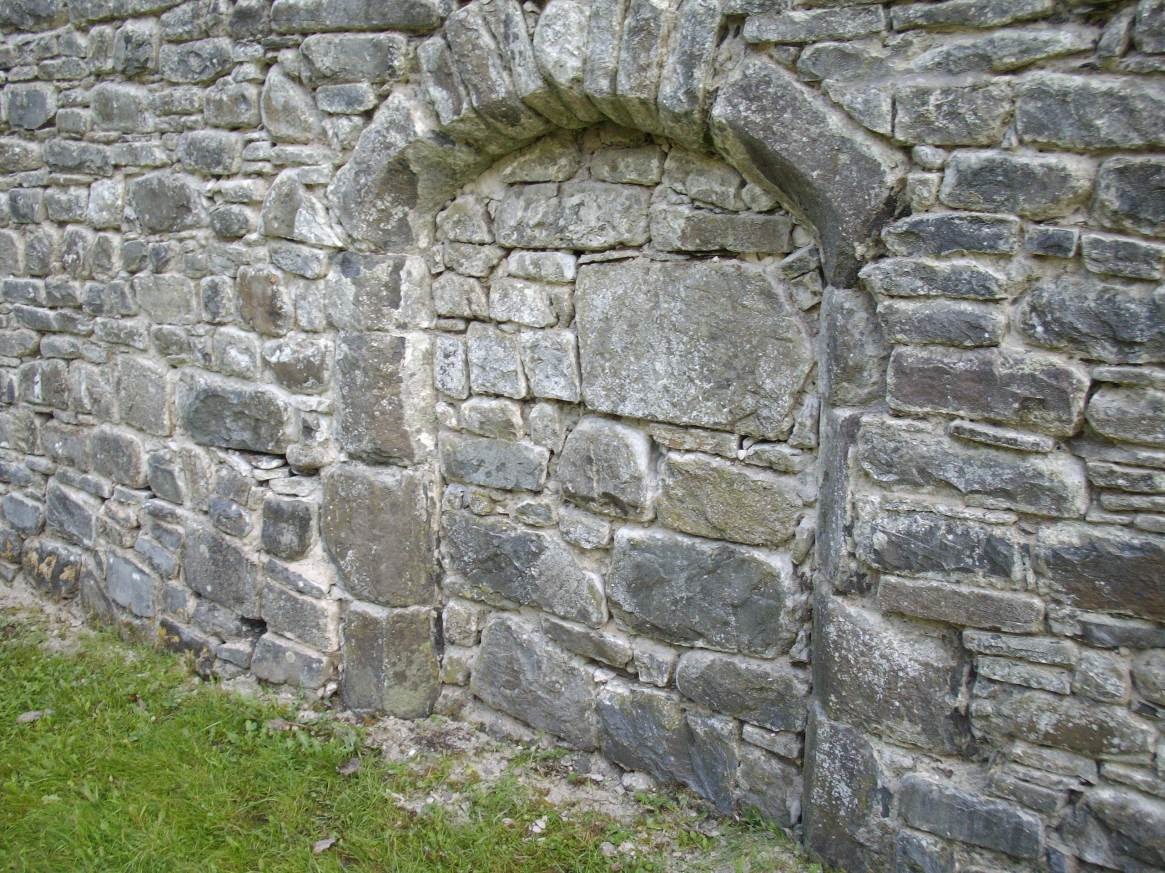
White washed walls
A memorial plaque was removed from the South wall so that contractor could access the old lime mortar beneath. The memorial plaque date 1765 revealed white lime based wash on the wall, indicating that the church was painted before 1765. Given the churches elevated position the gleaming white edifice would have been a magnificent sight.
 St David's Old Church, Llanwrtyd Wells